Observability
Observability
Every workspace has a Command center, one tab for each view of what happens across it. Administrators open it from the account menu.
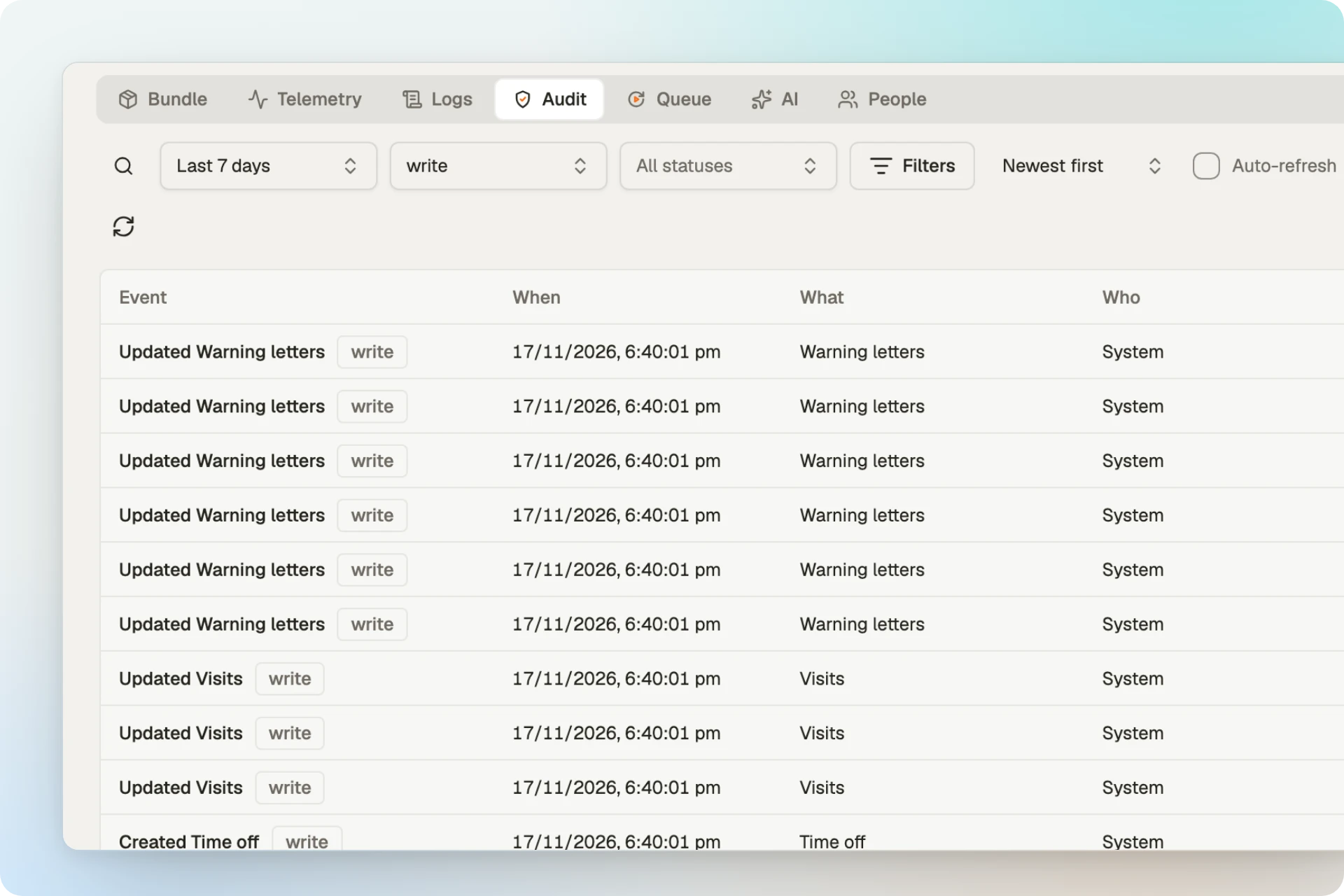
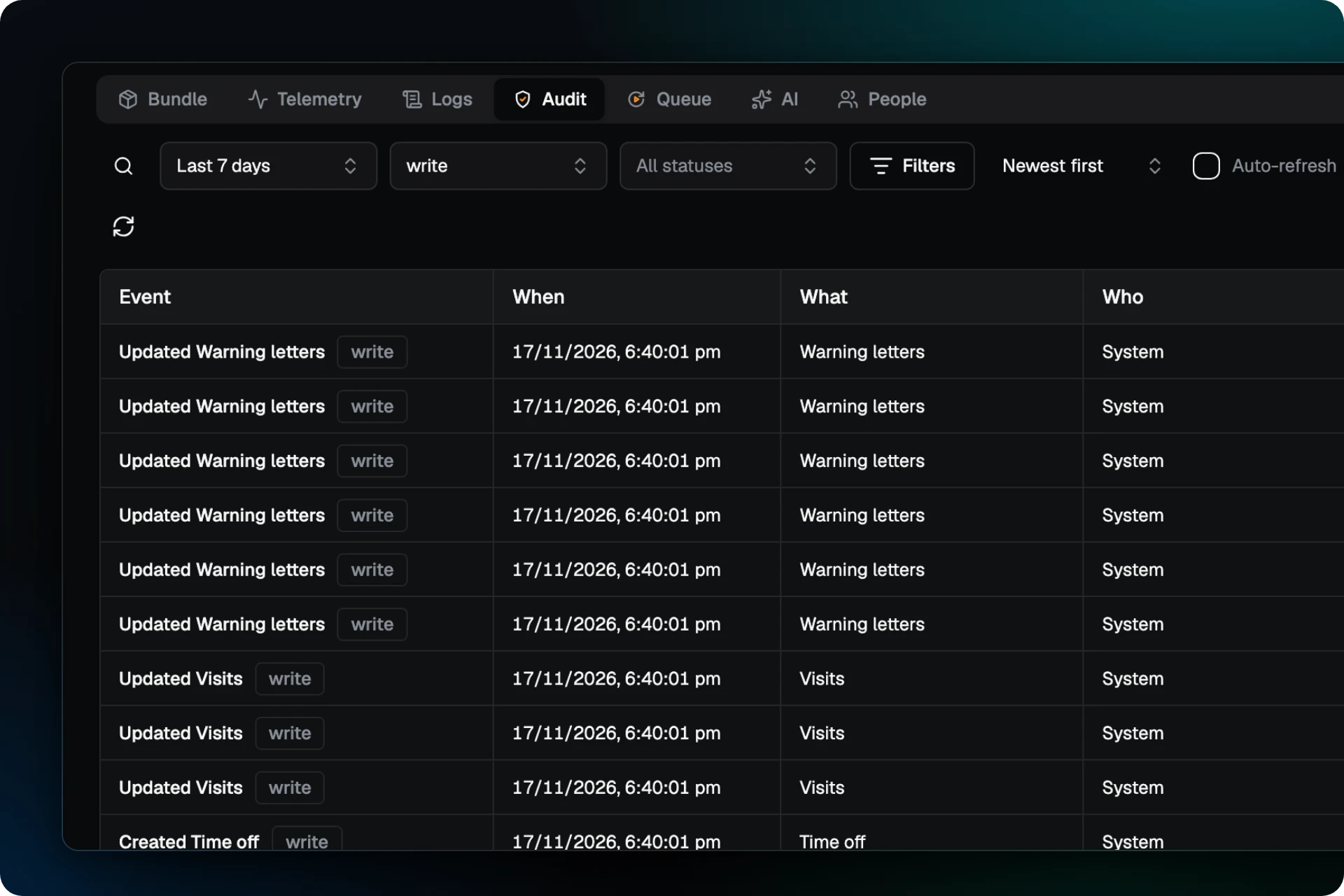
- Audit: every write, approval and refusal, with who made it, when and the outcome.
- Queue: every automation run, when it was due, what started it and how it ended. Run now starts one by hand.
- AI: the inference transcripts of automations and agents, opened read-only.
- People: the members and their invitations.
A host that serves inspection adds Bundle (the release digest, client size and package pins), Telemetry (resource use), Logs (the runtime log of one release), Activity and Improvements. Colony serves all five.
- Activity: the pages people open and how long they stay, and assistant activity by who used it (Norbius, envoys and system agents) with steps, failures and cost. It keeps a hash of each member’s id and their role; no name, no message and no record.
- Improvements: feedback people send from the account menu, with images, and automations that keep failing, each as a thread. Threads are always recorded. Automatic improvement is off until an administrator turns it on in Settings, under Assistant; then a system agent works on each thread in its own line of commits and reports once they pass diagnosis and tests and have a preview. It cannot merge; an administrator does. The sender sees in the same dialog what became of each thing they sent.